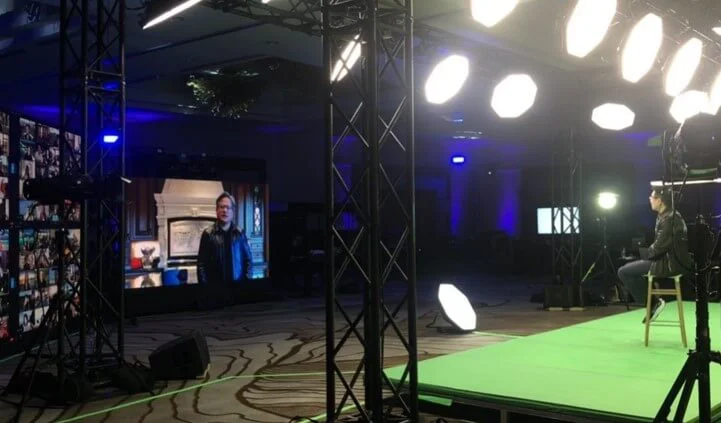
An auditorium or event space needs to support a range of activities: presentations, talks, large meetings and content broadcasting. To ensure everything runs smoothly, displays, sound, microphones and controls should be considered together and tailored to the space.
The right solution depends on more than the equipment selected. The room layout, viewing distance, acoustics and how the space is used also influence the project.
What should you consider in an audiovisual solution?
Every space has its own requirements, but there are several elements worth assessing from the outset:
-
Displays and projection: Screens, projectors or videowalls should be selected with the size of the room, participants’ viewing distance and the type of content presented in mind.
-
Sound and voice reinforcement: Loudspeaker distribution and system configuration should support clear listening throughout the areas in use.
-
Microphones: The choice depends on the event format, speaker mobility and the number of participants.
-
Video conferencing and broadcasting: When remote participants or broadcast events are involved, cameras, audio capture and integration with the planned platforms and equipment need to be assessed.
-
Control and operation: A simple interface can help the team select sources, adjust levels and start the required functions.
The final configuration should be defined after assessing how the space will be used and the compatibility between equipment.
Visuals that can be seen throughout the room
The display solution should enable participants to follow presentations, video and other content from their designated seats. The choice between projection, a professional display or a video wall depends on factors such as room size, ambient light, viewing distance and intended use.
It is also important to consider screen placement, viewing angles and the connections needed for presenters’ equipment. Good preparation reduces interruptions when changing content or sources.
Clear sound and adequate coverage
In an auditorium, sound should reach the areas in use adequately and allow people to follow speech. Acoustics, room geometry, surface materials and ambient noise influence how the system should be designed.
Microphones, loudspeakers and audio processing should be selected as part of a complete system. In spaces with significant reverberation, it may be necessary to assess the acoustic conditions and, where applicable, consider corrective measures alongside the sound system.
Preparing the space for hybrid events
When an event includes remote participants, the experience depends on capturing and transmitting video and audio. Camera placement, microphone coverage and equipment integration should be planned for the intended format—for example, a presentation with one speaker or a discussion involving several participants.
Before defining the solution, it is worth identifying the platforms used, the content to be shared and who will be responsible for operation during the event. Technology should serve the event format without making it unnecessarily complicated to use.
How do you choose a solution for your auditorium?
An initial assessment helps turn the needs of the space into concrete requirements:
-
Define how the space will be used: presentations, conferences, training, internal events or hybrid sessions.
-
Consider capacity and layout: seating, distances, circulation areas and speaker locations.
-
Assess visual requirements: content, desired display size and lighting conditions.
-
Identify audio requirements: microphone types, sound coverage and the need to reproduce speech or other content.
-
Plan operation: who will use the system, which functions they need to control and what technical support may be required.
-
Check the infrastructure: cabling, power, network, installation points and access for maintenance.
The solution should reflect how the space is actually used and account for how the equipment will be integrated and operated.
Integration, installation and technical support
Integrating displays, sound, video conferencing and control helps create a coherent system for the space. Installation should take into account existing infrastructure, cable routing, equipment placement and access for maintenance.
InteliAV can support the assessment of an auditorium’s or event space’s needs and the definition of an audiovisual solution, from equipment selection through to integration and installation.
Are you equipping or upgrading an auditorium or event space? Request a proposal from InteliAV.